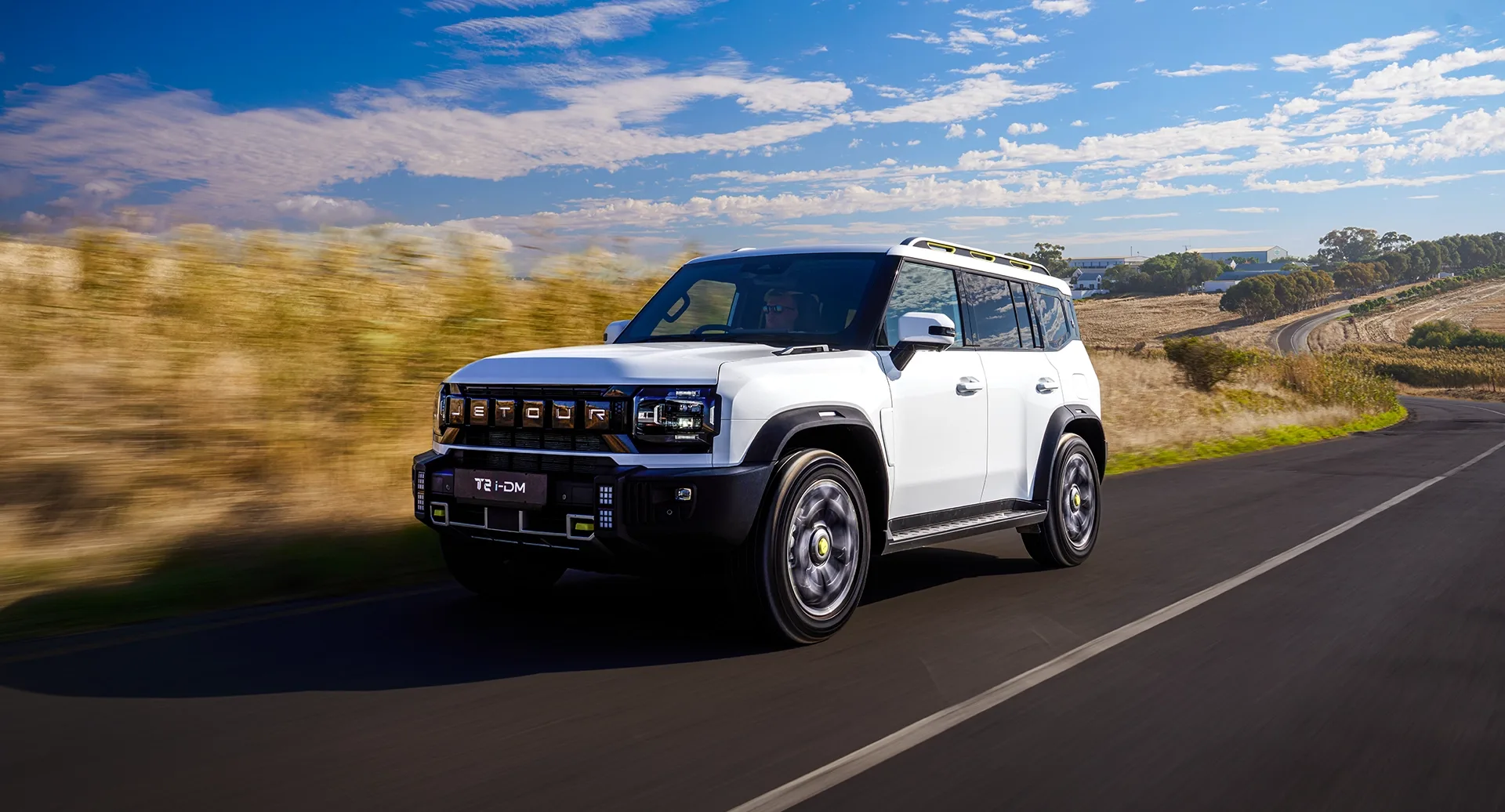
 Petrol / Hybrid
All cars
Petrol / Hybrid Compare with the T2 Petrol / Hybrid
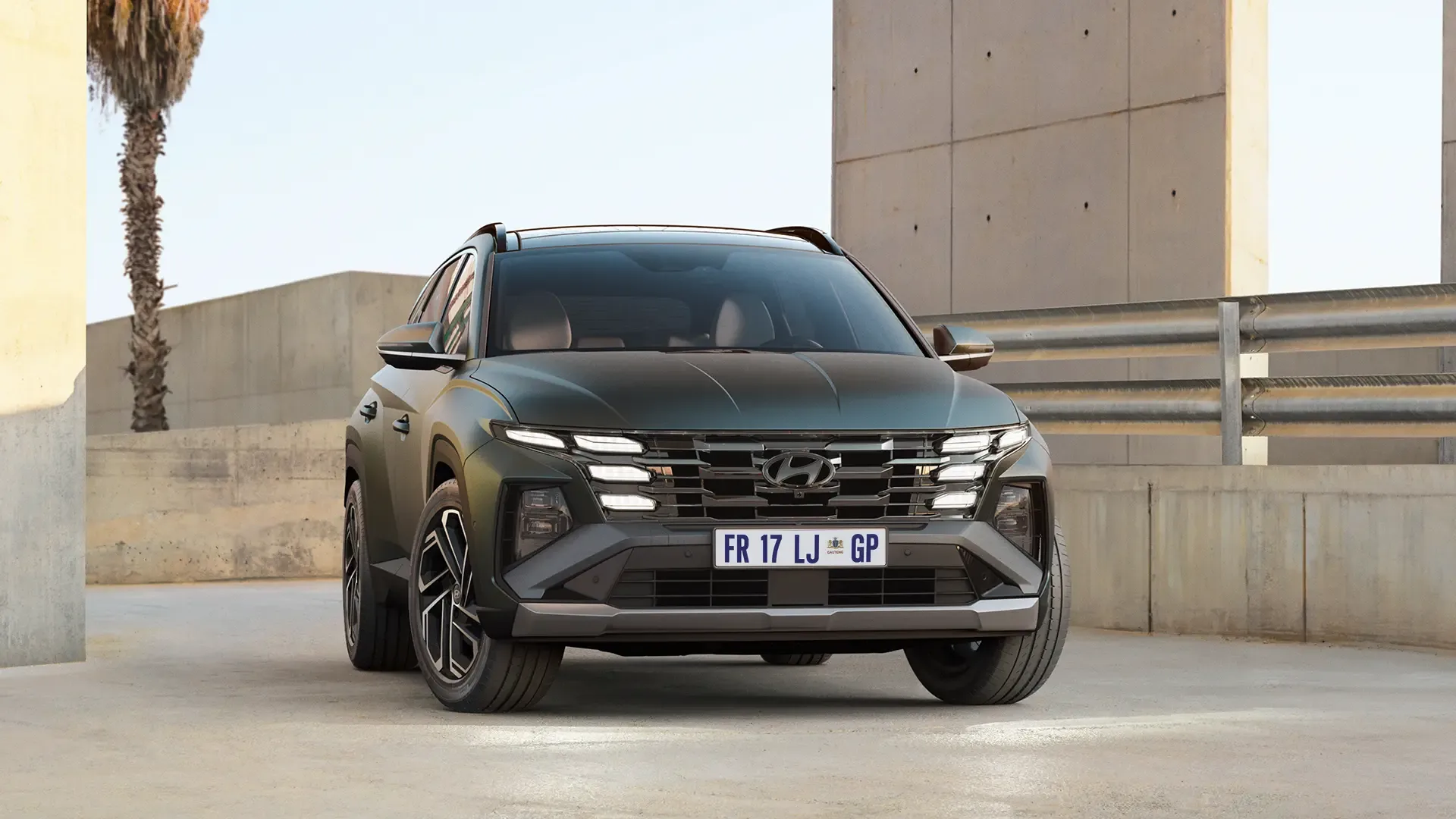 Petrol / Diesel
HavalJust landed
H7
R554 900 – R794 900
Manufacturer's recommended retail price
Our take: 8/10Read our first look
A mid-size SUV sold with a 2.0-litre turbo petrol engine, a 1.5-litre turbo self-charging hybrid, and a 1.5-litre turbo plug-in hybrid. Petrol and plug-in hybrid versions come in two-wheel-drive and four-wheel-drive form; the self-charging hybrid is two-wheel-drive only.
Key specs
- Body type
- Medium SUV
- Engine
- 1.5–2.0L
- Transmission
- Auto
- Seats
- 5
- Fuel
- Petrol / Hybrid / Plug-in Hybrid
- Drive
- FWD / AWD
Our first look
Launched 22 October 2026 · Our take, not a road test
8/10Overall
- Kerb appeal
- 7 out of 10
- Gadget factor
- 9 out of 10
- Bang for your buck
- 8 out of 10
- Daily driver
- 8 out of 10
The Haval H7 starts at R554 900, below the Jetour T2 and Hyundai Tucson, and every version has a 15.6-inch screen, a 360° camera, CarPlay and a 7-year/200 000 km warranty. The real choice is the powertrain: the self-charging hybrid claims 5.3 L/100km, the plug-ins claim 115 to 130 km of electric range, and the hybrids tow 1 500 kg against the petrol's 2 000 kg. Pick an Ultra Luxury for blind spot monitoring.
Read the full first lookShow less
The Haval H7 is GWM's five-seat medium SUV, sold in six versions from R554 900 to R794 900 with petrol, self-charging hybrid or plug-in hybrid power. That starting price is below the Jetour T2 (from R569 900) and Hyundai Tucson (from R559 900), and R15 000 above the Omoda C7 (from R539 900), so the Haval H7 sits in the middle of this group on price.
Start with the petrol: a 2.0-litre turbo with 170 kW and 380 Nm, a nine-speed dual-clutch gearbox, front- or all-wheel drive, and a claimed 8.0 or 8.8 L/100km. The 1.5-litre self-charging hybrid makes 182 kW and 540 Nm, drives the front wheels and claims 5.3 L/100km. The plug-in versions have a 23.7 kWh battery. The front-drive one makes 240 kW and 540 Nm and claims 130 km of electric range. The top Hi4 all-wheel-drive version makes 280 kW and 670 Nm and claims 115 km. That is more power and torque than the front-drive plug-ins from the Jetour T2 (265 kW, 610 Nm) and Omoda C7 (255 kW, 525 Nm).
The hybrid premium is what you need to weigh. The self-charging hybrid costs R70 000 more than the petrol with the same Super Luxury trim, for a claimed saving of 2.7 L/100km, and both hybrids tow 1 500 kg against the petrol's 2 000 kg. The test behind the H7's electric range figures isn't stated, while the T2's 90 km is an NEDC claim, so don't compare them directly. Fuel claims aren't comparable either: the H7 plug-in's 5.3 L/100km sits against 1.3 for the T2 and 4.9 for the C7, and nothing we've seen explains how each was measured.
On practicality, the boot holds 586 litres, or 1 404 litres with the 60:40 rear seats folded. Launch reports give a ground clearance of 210 mm, which is below the T2 petrol's 220 mm but well above the C7 (171 to 176 mm) and Tucson (181 mm). Every plug-in can power appliances at up to 6 kW, and the all-wheel-drive versions add a locking rear differential and extra drive modes.
Equipment is generous from the bottom up. Every version has a 15.6-inch touchscreen, a 360° camera, Apple CarPlay, Android Auto, LED headlamps, 19-inch alloy wheels and six airbags. Launch reports add a panoramic sunroof, adaptive cruise control and autonomous emergency braking across the range. The Ultra Luxury versions add a head-up display, heated and ventilated front seats, a heated steering wheel, blind spot monitoring and rear cross-traffic alert. The self-charging hybrid and front-drive plug-in are Super Luxury versions, so they aren't listed with those last two driver aids. The Jetour T2 lists emergency braking and adaptive cruise on only two of its four versions, and the Tucson page lists neither.
Ownership is a highlight. Every H7 has a 7-year/200 000 km warranty and a 7-year/75 000 km service plan, with services every 12 months or 15 000 km, and the hybrids add an 8-year/150 000 km battery warranty. The T2 matches the warranty and service plan, with 160 000 km of battery cover. The Tucson has 5 years/150 000 km and a 5-year/75 000 km plan.
For town driving with home charging, the front-drive plug-in is the sensible hybrid. If you want the extra safety kit and all-wheel drive, the Ultra Luxury Hi4 is worth the R60 000 step up. If you tow or watch the budget, the petrol Ultra Luxury is the one to price.
What we like
- starts at R554 900 (below Jetour T2 & Hyundai Tucson)
- Hi4 makes 280 kW and 670 Nm
- 7-year/200 000 km warranty (on every version)
- 7-year/75 000 km service plan (on every version)
- 586-litre boot, growing to 1 404 litres with the rear seats folded
What we don't
- hybrids tow 1 500 kg, against 2 000 kg for the petrol
- blind spot monitoring only on Ultra Luxury, not on the HEV or front-drive plug-in
- front-drive plug-in costs R734 900, R180 000 above the entry petrol
The hybrid uses 34% less fuel
- Hybrid5.3 L/100km
- Petrol8.0 L/100km
Full specifications
| Model year | 2026 |
|---|---|
| Power | 170–280 kW |
| Torque | 380–670 Nm |
| Engine size | 1.5–2.0L |
| Airbags | 6 |
| Electric motor | 130 kW / 295 Nm |
| Electric range | 115–130 km |
| Towing (braked) | 1 500–2 000 kg |
| Service plan | 7 years / 75 000 km |
| Service interval | 12 months / 15 000 km |
| Warranty | 7 years / 200 000 km |
| Battery warranty | 8 years / 150 000 km (some versions) |
Versions (6)
2.0T 9DCT Super Luxury 2WDPetrol
- Fuel
- Petrol
- Engine
- 2.0L
- Power
- 170 kW
- Torque
- 380 Nm
- Transmission
- DCT (9-speed)
- Drive
- FWD
- Fuel economy
- 8.0 L/100km
- Airbags
- 6
- Service plan
- 7 years / 75 000 km
- Warranty
- 7 years / 200 000 km
- Towing (braked)
- 2 000 kg
2.0T 9DCT Ultra Luxury 2WDPetrol
- Fuel
- Petrol
- Engine
- 2.0L
- Power
- 170 kW
- Torque
- 380 Nm
- Transmission
- DCT (9-speed)
- Drive
- FWD
- Fuel economy
- 8.0 L/100km
- Airbags
- 6
- Service plan
- 7 years / 75 000 km
- Warranty
- 7 years / 200 000 km
- Towing (braked)
- 2 000 kg
2.0T 9DCT Ultra Luxury 4WDPetrol
- Fuel
- Petrol
- Engine
- 2.0L
- Power
- 170 kW
- Torque
- 380 Nm
- Transmission
- DCT (9-speed)
- Drive
- AWD
- Fuel economy
- 8.8 L/100km
- Airbags
- 6
- Service plan
- 7 years / 75 000 km
- Warranty
- 7 years / 200 000 km
- Towing (braked)
- 2 000 kg
1.5T HEV DHT Super Luxury 2WDHybrid
- Fuel
- Hybrid
- Engine
- 1.5L
- Power
- 182 kW
- Torque
- 540 Nm
- Transmission
- Automatic
- Drive
- FWD
- Fuel economy
- 5.3 L/100km
- Airbags
- 6
- Service plan
- 7 years / 75 000 km
- Warranty
- 7 years / 200 000 km
- Battery warranty
- 8 years / 150 000 km
- Towing (braked)
- 1 500 kg
1.5T PHEV DHT Super Luxury 2WDPlug-in Hybrid
- Fuel
- Plug-in Hybrid
- Engine
- 1.5L
- Power
- 240 kW
- Torque
- 540 Nm
- Transmission
- Automatic
- Drive
- FWD
- Fuel economy
- 5.3 L/100km
- Airbags
- 6
- Service plan
- 7 years / 75 000 km
- Warranty
- 7 years / 200 000 km
- Battery warranty
- 8 years / 150 000 km
- Electric motor
- 130 kW / 295 Nm
- Electric range
- 130 km
- Towing (braked)
- 1 500 kg
1.5T PHEV DHT Ultra Luxury (Hi4) 4WDPlug-in Hybrid
- Fuel
- Plug-in Hybrid
- Engine
- 1.5L
- Power
- 280 kW
- Torque
- 670 Nm
- Transmission
- Automatic
- Drive
- AWD
- Fuel economy
- 5.7 L/100km
- Airbags
- 6
- Service plan
- 7 years / 75 000 km
- Warranty
- 7 years / 200 000 km
- Battery warranty
- 8 years / 150 000 km
- Electric range
- 115 km
- Towing (braked)
- 1 500 kg
Features
✓ Standard · + Optional extra · ✕ Not available · — Not stated by the manufacturer
Key features
- 360° camera
- Standard
- Apple CarPlay
- Standard
- Android Auto
- Standard
Safety (1)
- Airbag positions
- Front, side, curtain
Tech and connectivity (1)
- Touchscreen
- 15.6 in
Exterior (2)
- Wheels
- 19 in alloy
- Headlamps
- LED
Rivals
Petrol / HybridPetrol / HybridPetrol / Diesel